
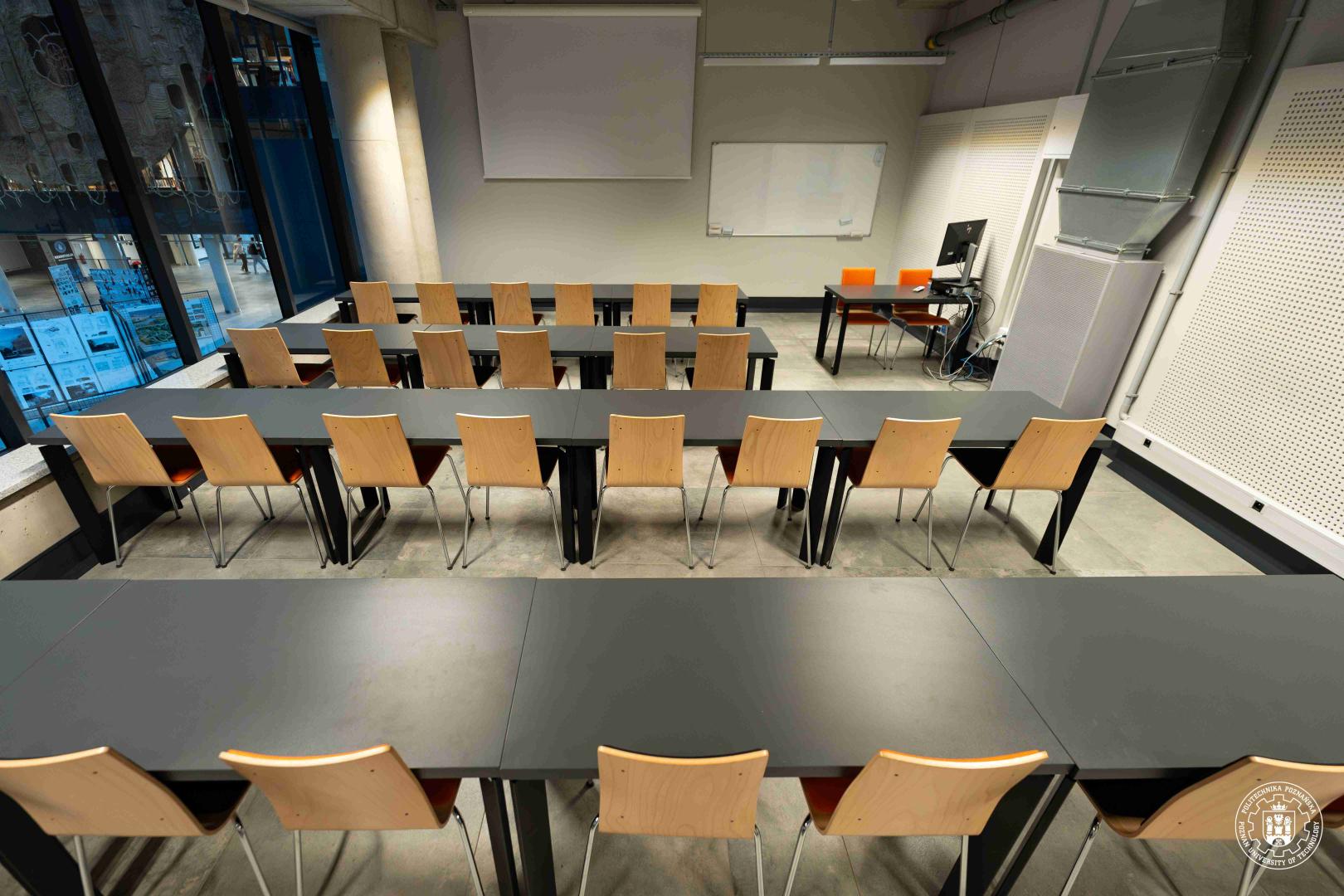
On 28 October 2025, seven so-called hybrid classrooms were officially accepted for use. These are teaching rooms designed to conduct classes in a hybrid format.
The modernization of these spaces is one of the key project activities aimed at eliminating architectural barriers at Poznan University of Technology. The investment was financed partly through the project “Poznań University of Technology – a Leader in Accessibility”, which covered construction works and specialised multimedia equipment, and partly through the Fund for the Support of Persons with Disabilities, which financed additional equipment such as screens and monitors. The latter funding was administered by the Equality Office.
Conducting classes in a hybrid format increases the accessibility of Poznan University of Technology and enables participation in lectures by people with special needs, including persons with disabilities, who due to their health condition are not always able to attend classes in person.
Hybrid teaching can be conducted in several formats:
- Hybrid classes: the lecturer is present in the classroom, while students participate both on-site and online.
- Remote classes: the lecturer is in the classroom, and students connect online.
- Remote lecturer: the lecturer connects online, while students are present in the classroom.
- Traditional classes, without the use of a videoconferencing system.
- The videoconferencing system is compatible with all popular online meeting platforms; however, the use of the university’s internal eMeeting platform is recommended.
To conduct classes in videoconference mode, the desktop computer installed in the hybrid classroom should be used. The microphones are arranged to capture sound from the entire room, allowing for smooth lecturing and audience interaction. A remotely controlled camera enables the presenter to adjust the framing according to their needs. Additionally, two default camera views have been prepared and can be quickly selected using a remote control.
Each hybrid classroom is equipped with the following audio-video equipment:
- desktop computer,
- integrated videoconferencing system with echo cancellation,
- remotely controlled camera,
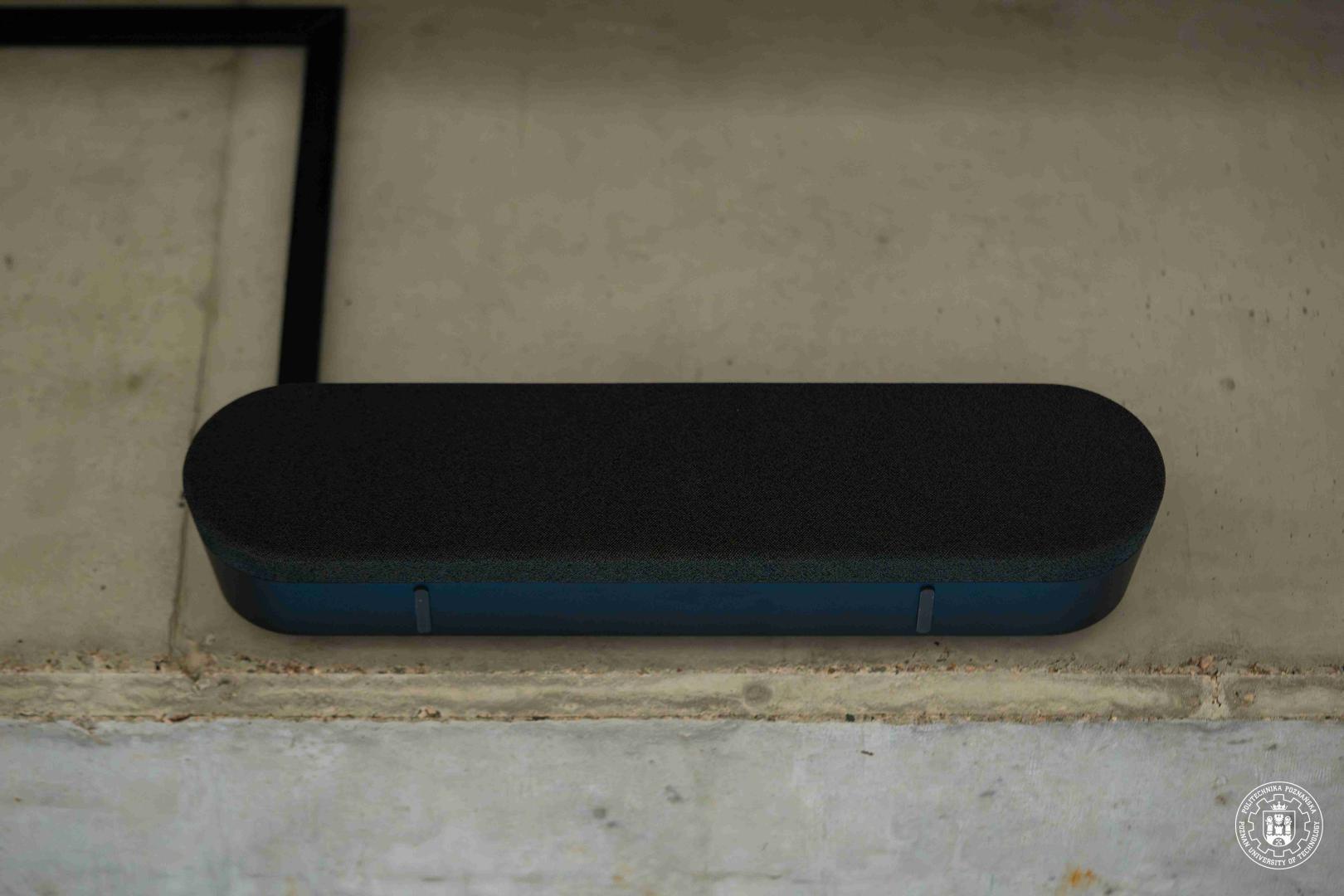
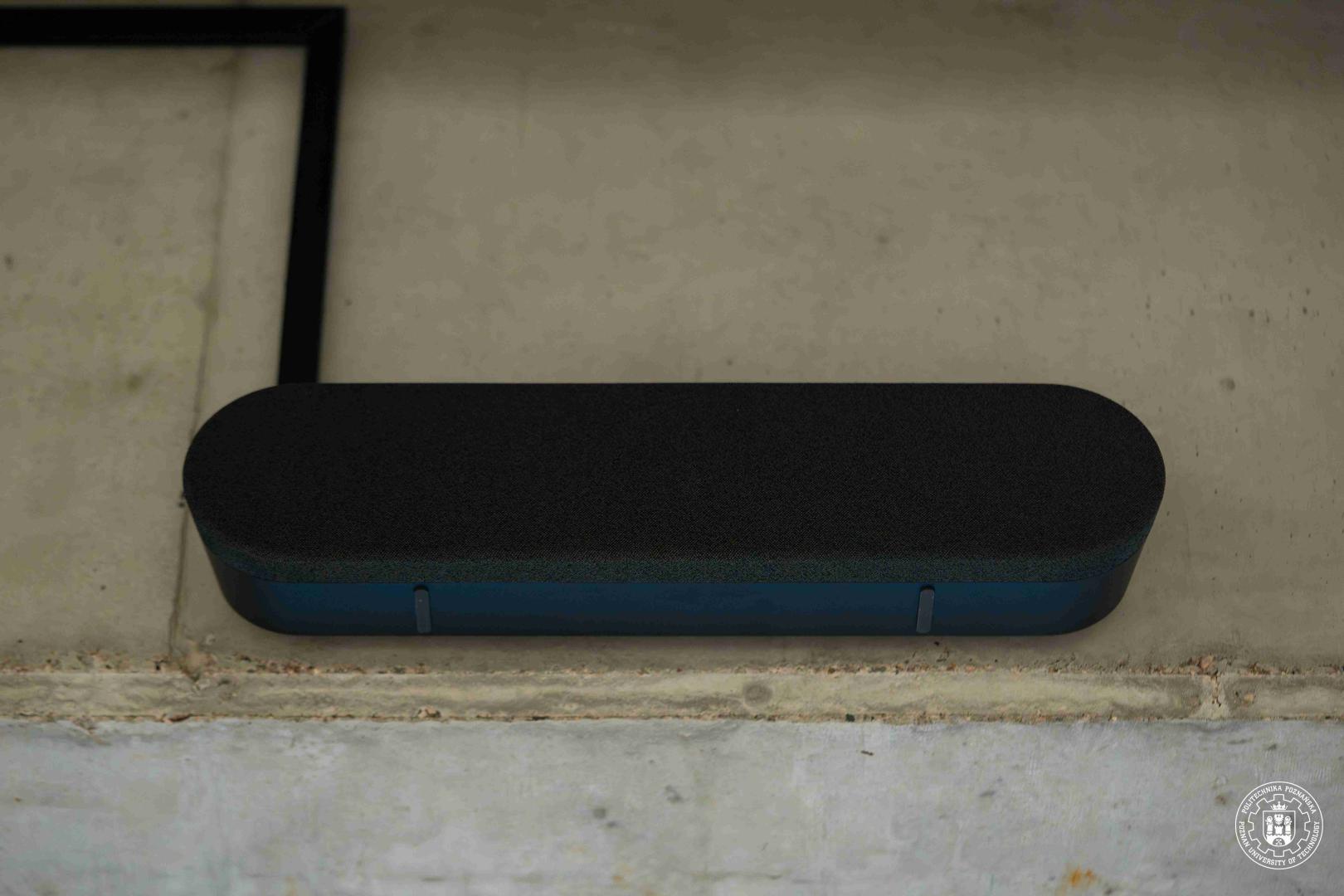
- two speakers,
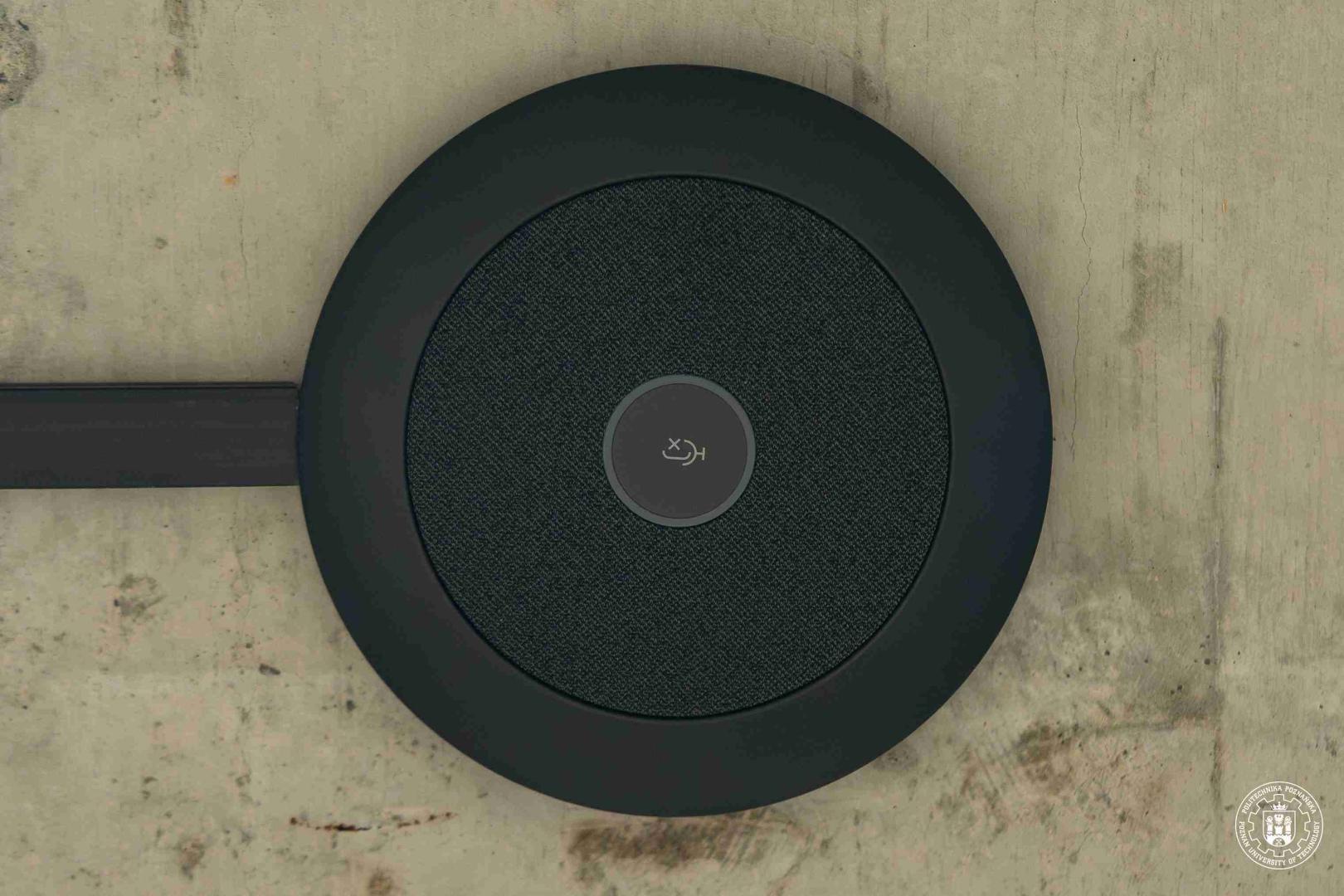
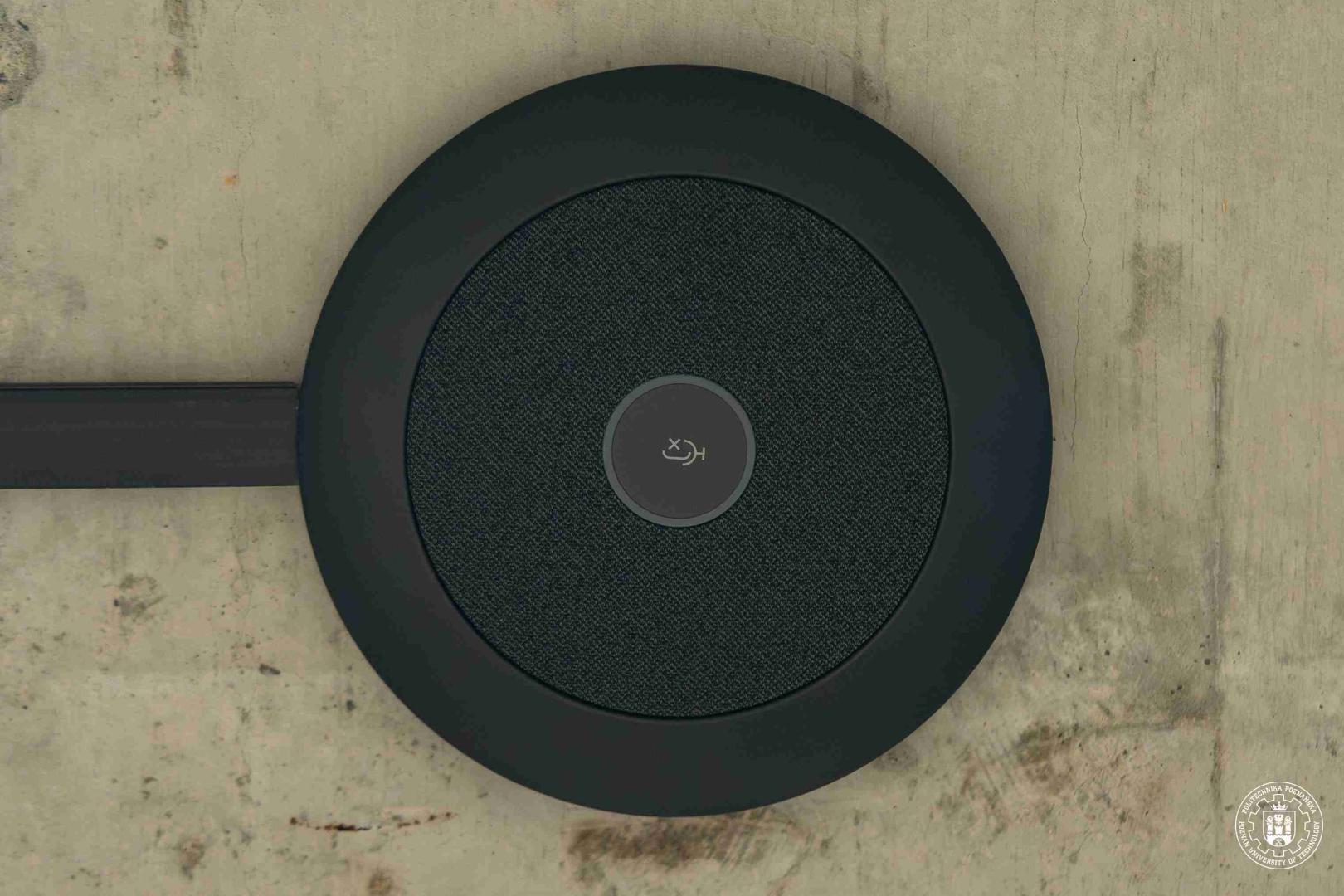
- two ceiling microphones,
- remote control (available at the porter’s desk).
The classrooms were prepared for seven faculties that previously did not have such facilities:
- Faculty of Materials Engineering and Technical Physics – Room 303 (Building A1)
- Faculty of Computing and Telecommunications – Room 108 (Building A3)
- Faculty of Environmental Engineering and Energy – Room 211 (Building A3)
- Faculty of Automation, Robotics and Electrical Engineering – Room 312 (Building A3)
- Faculty of Mechanical Engineering – Room 107 (Building A5)
- Faculty of Engineering Management – Room 116 (Building A30)
Earlier, two hybrid classrooms were financed directly by the University: one for the Faculty of Chemical Technology (Room 001A, Building A28) and one for the Faculty of Civil Engineering and Transport (Room 427, Building A1).
Summary
Thanks to the implementation of this project, every faculty at Poznan University of Technology now has at least one hybrid classroom, marking a milestone in ensuring accessible education at our University.
Accessibility Team