

On November 3, 2025, work on Task 3.5: Implementation of Horizontal Signage in Building A30 was completed. This significantly increased the accessibility of the Faculty of Architecture and the Faculty of Engineering Management for people with special needs, including those with disabilities.
As is well known, the absence of horizontal signage is particularly challenging for people with low vision or blindness. Uniform colours on stairs and floors, without contrasting or tactile markings, can cause disorientation and increase the risk of falls. Implementing signage for key pedestrian routes and stairs—using contrasting strips on the first and last steps of each flight, along with attention fields indicating the approach to stairs—is a critical measure to improve the safety of persons with disabilities. Naturally, such solutions also improve comfort for all building users. After all, someone glued to a mobile phone can also benefit—a point worth reflecting on.
The project involved the preparation and installation of:
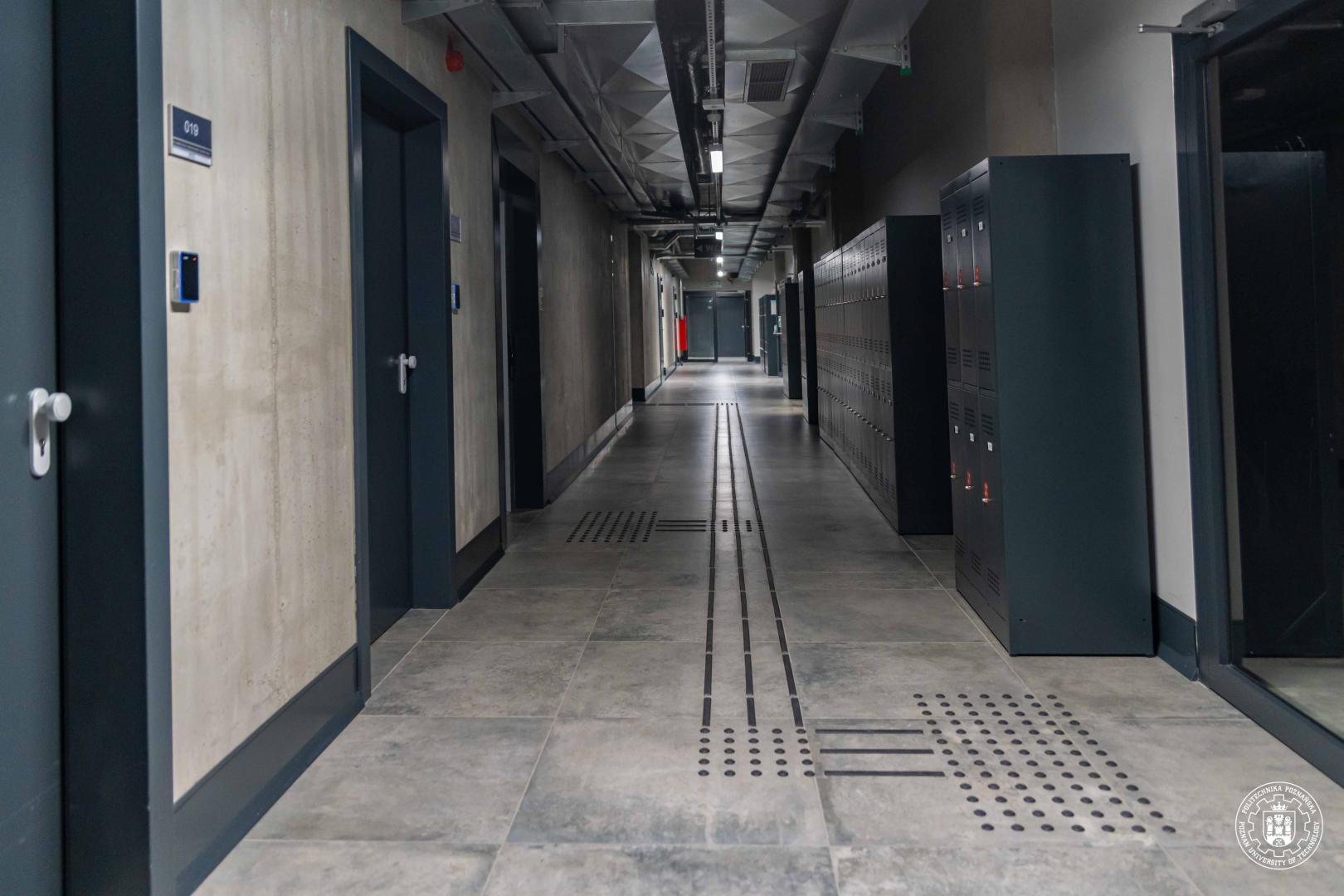
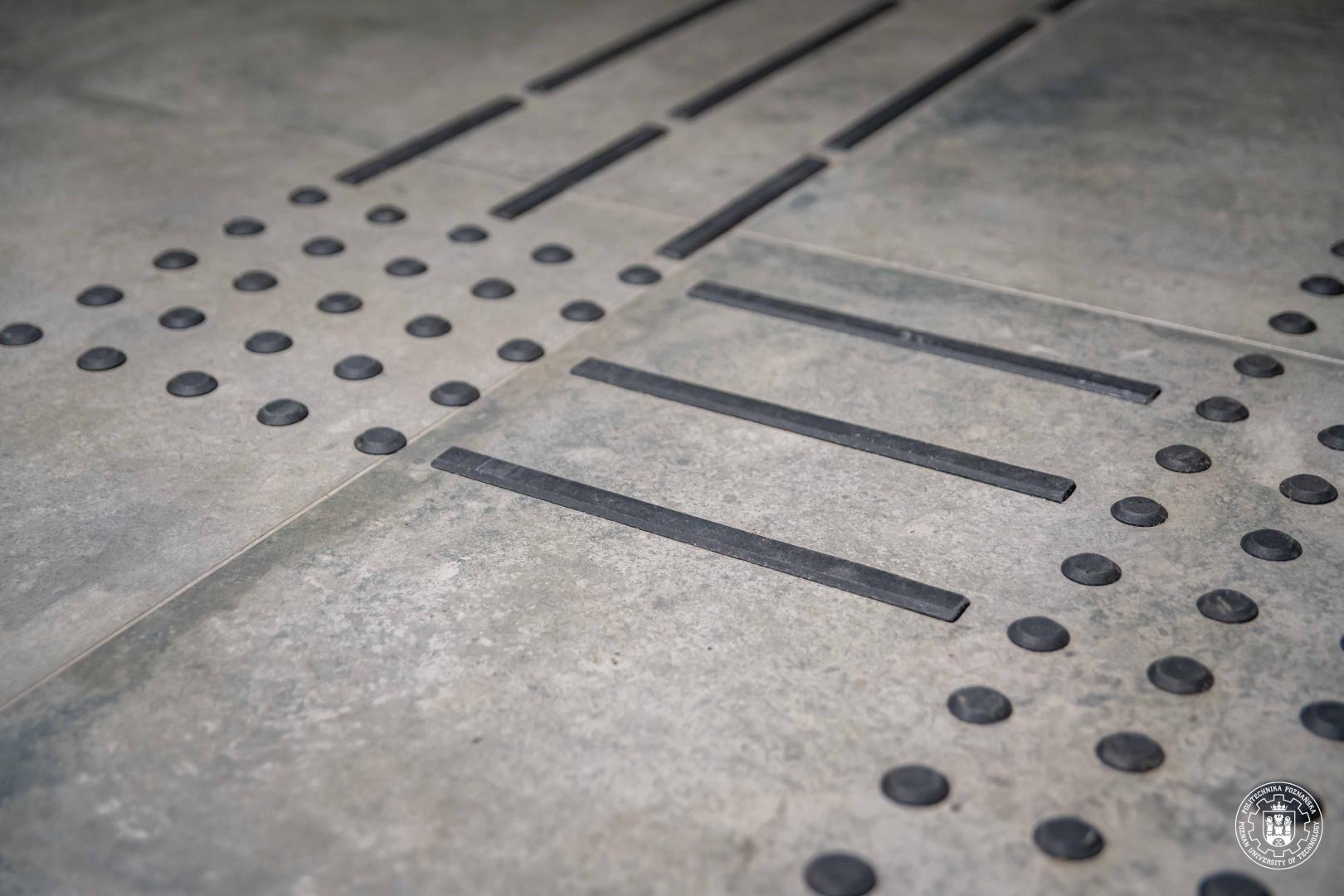
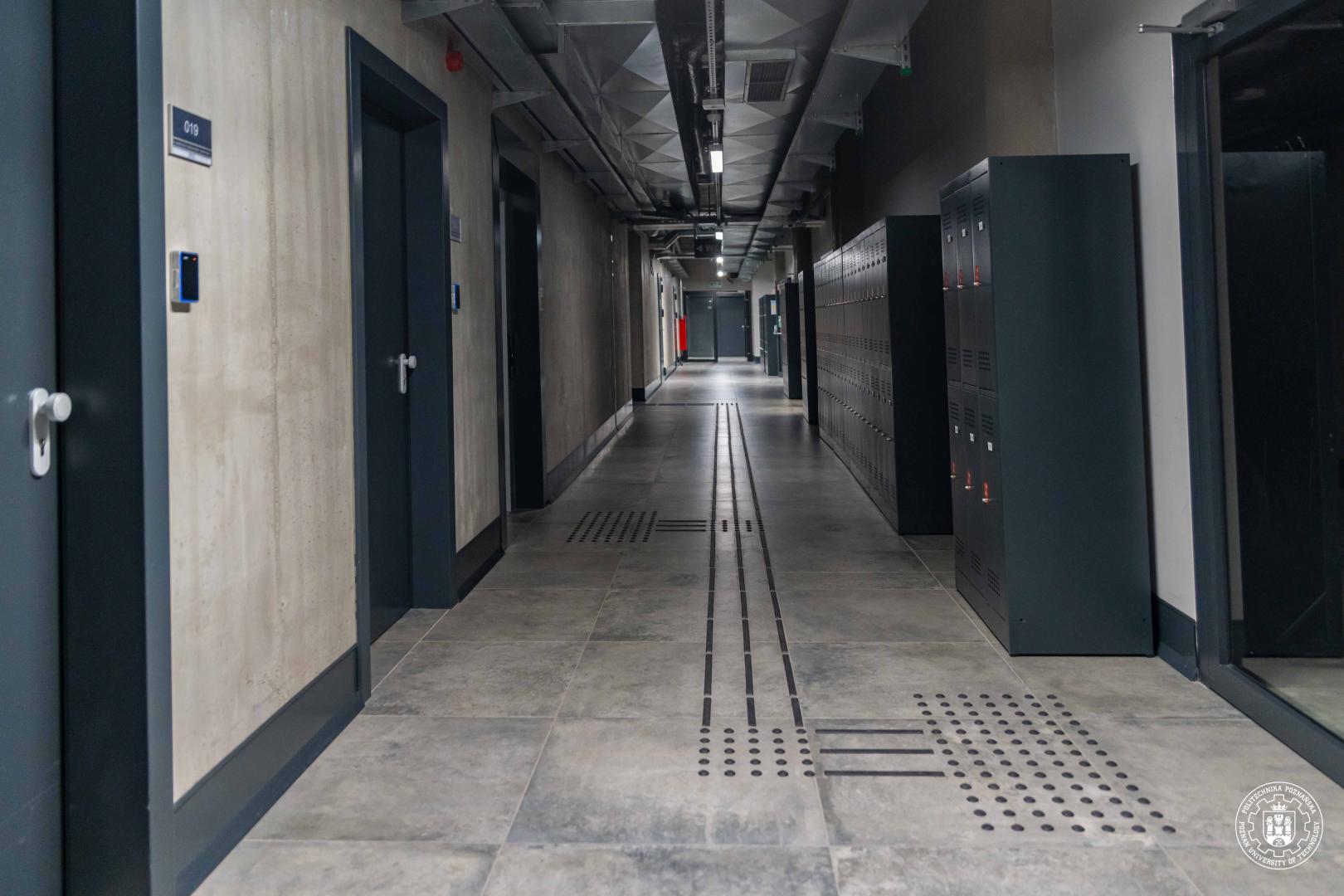
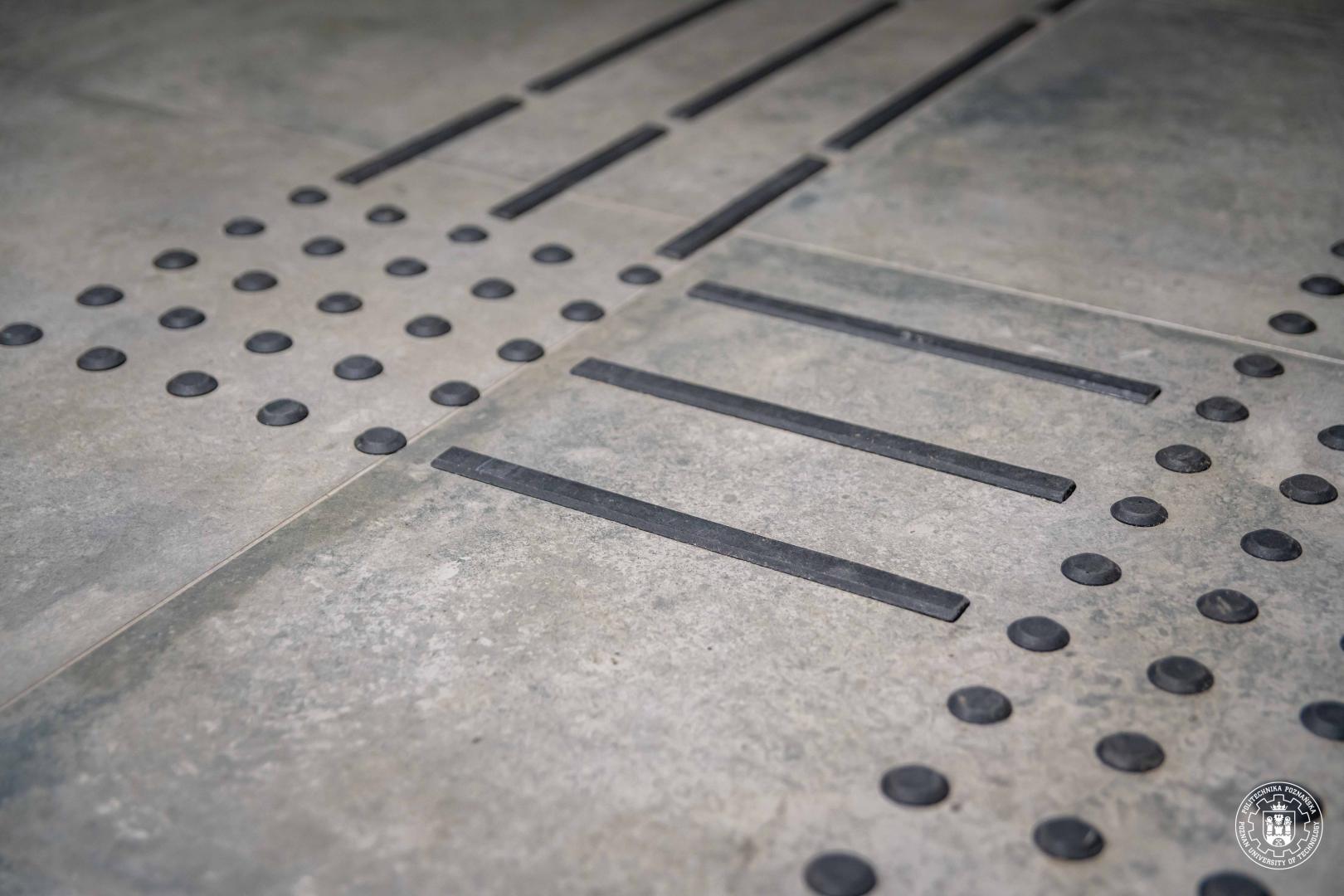
- Guiding black lines from the entrance to key locations (20 meters), e.g., from the Architectural Accessibility Laboratory to elevators and restrooms.
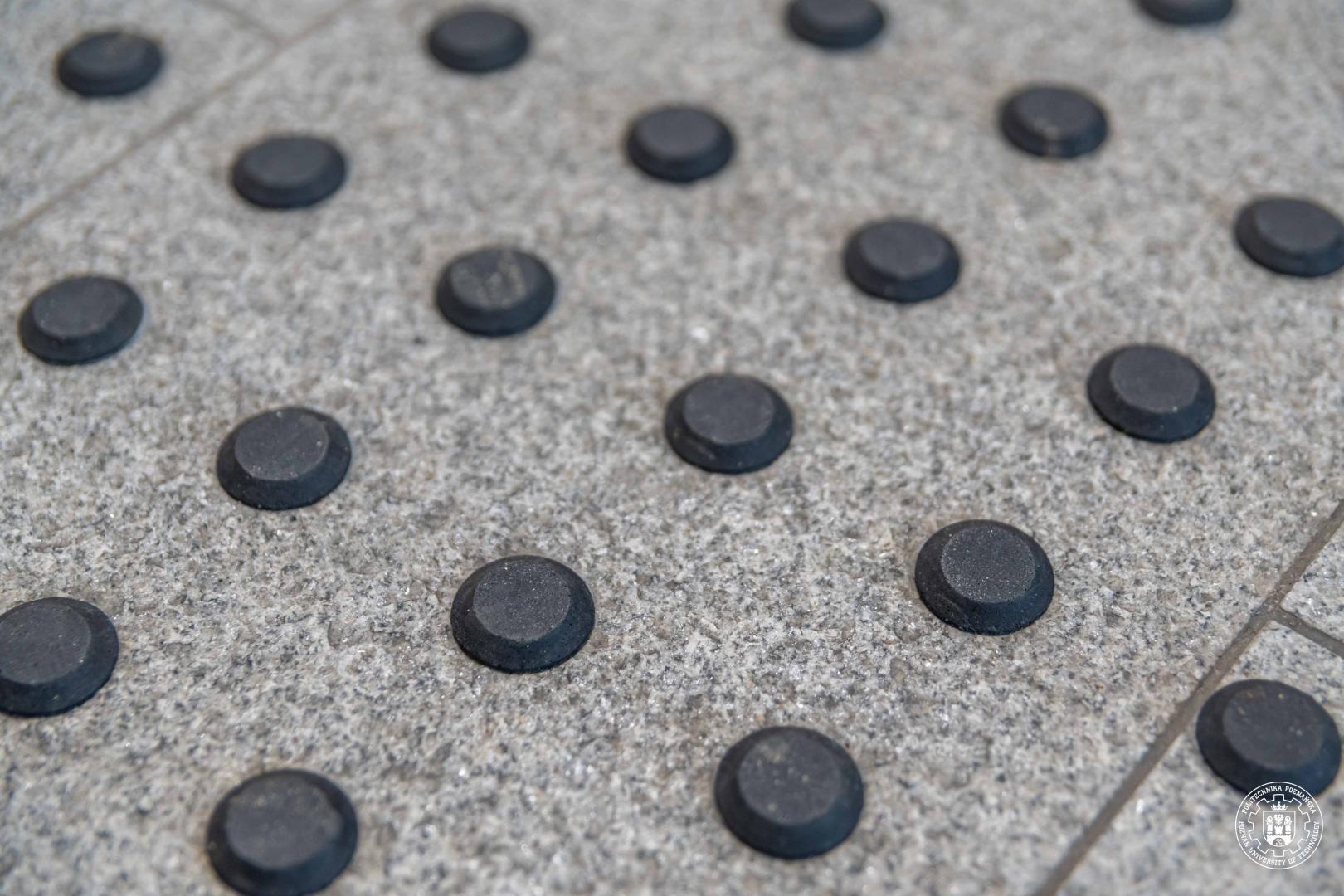
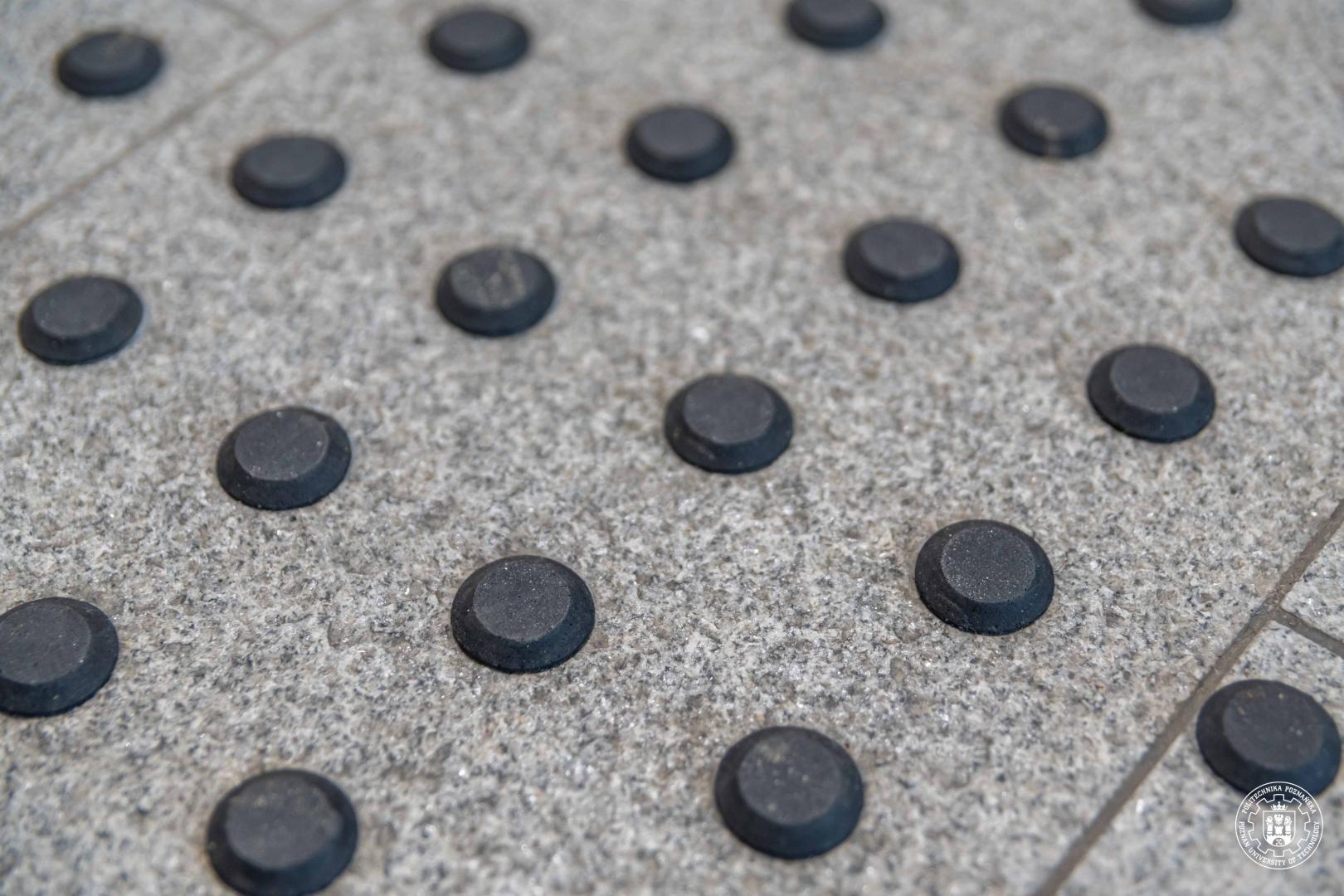
- Attention fields in black, of widths compliant with accessibility standards, leading to stairs (ascending and descending) and elevator entrances (164 meters).
- Edge markings on stairs with black strips on the first and last step of each flight (280 meters). Notably, a novel thick-layer poured reactive resin technique was used, considered one of the most durable solutions in such applications.
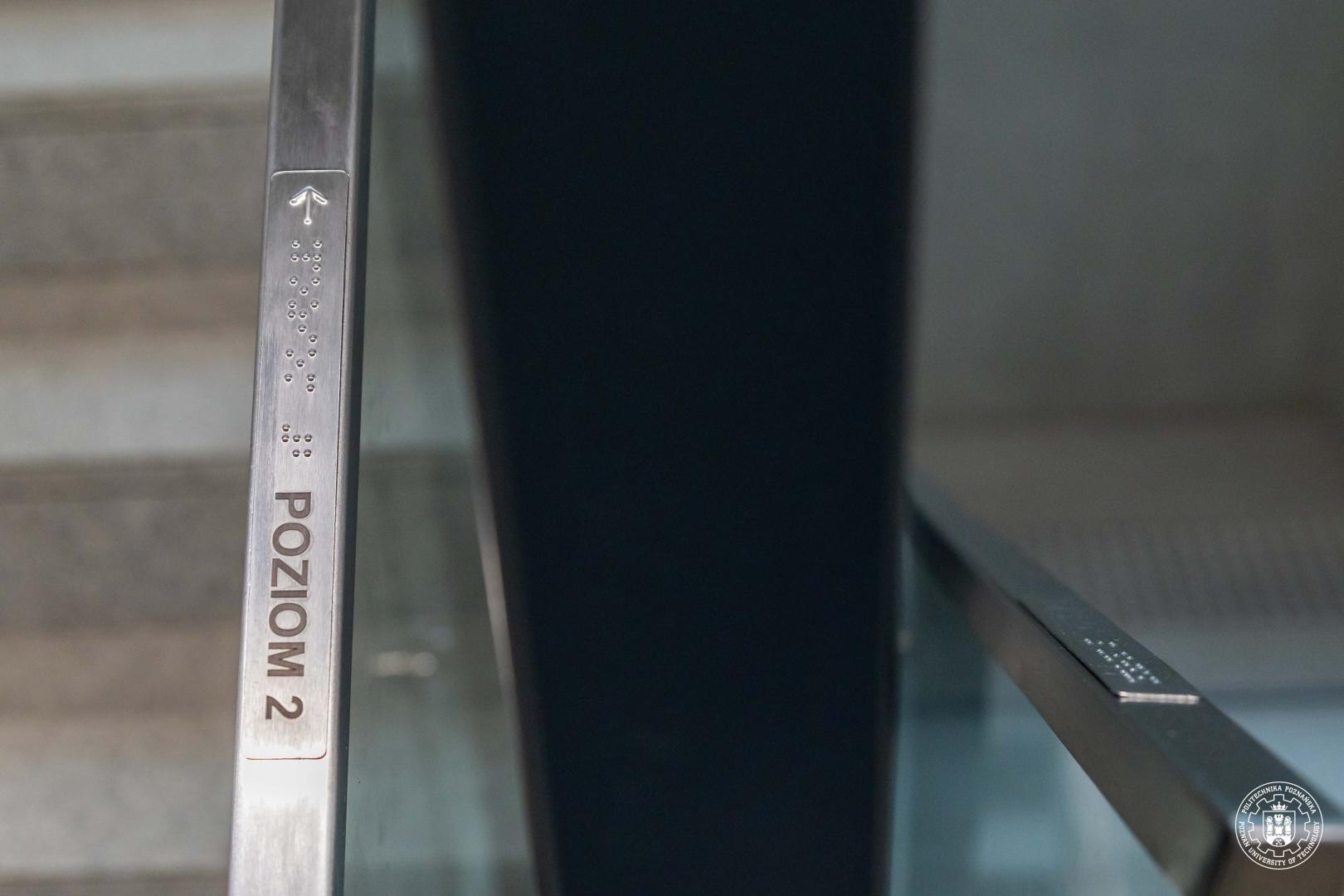
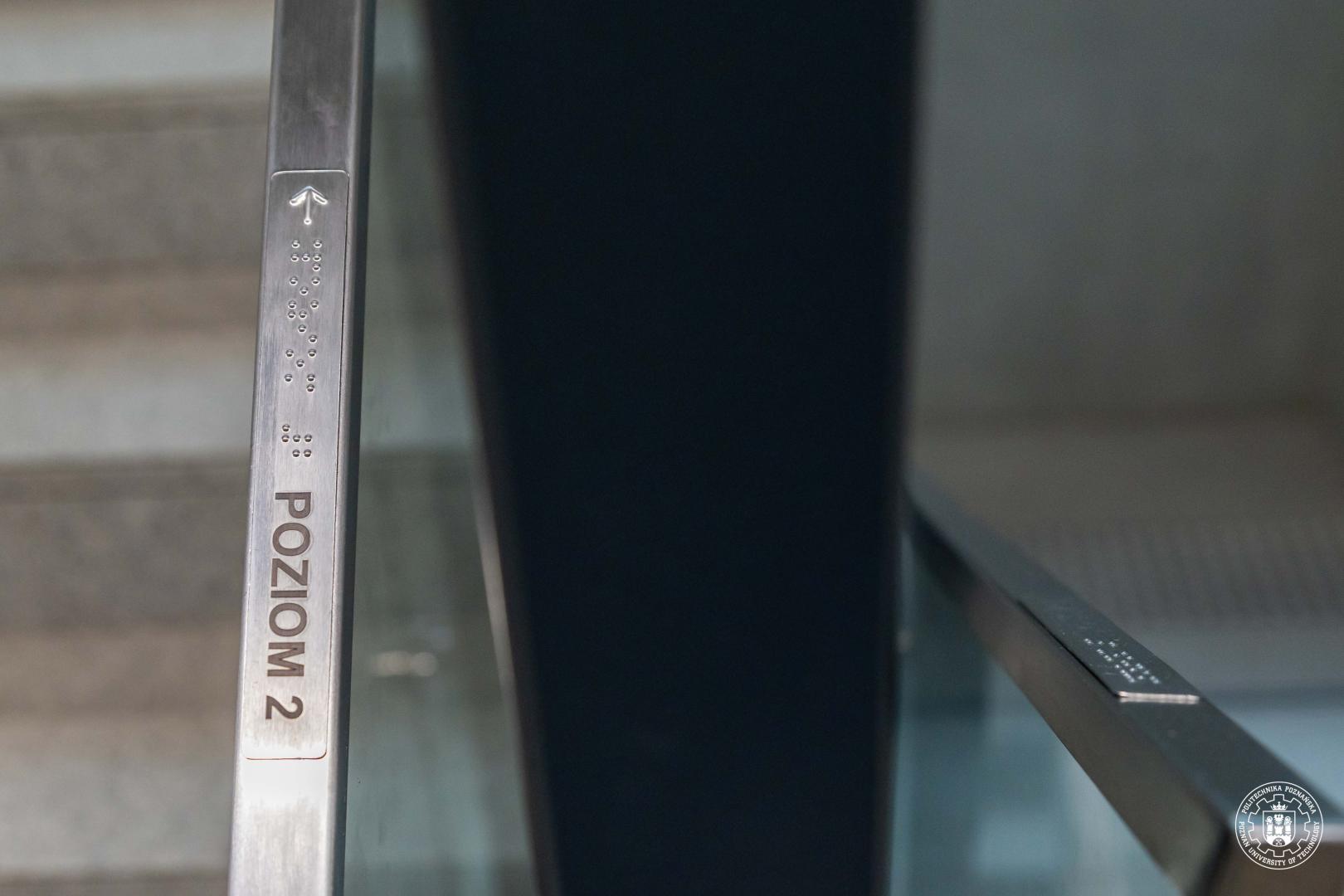
- Handrail signage in Braille (64 units in total).
All works were carried out under the technical supervision of Assoc. Prof. Agata Gawlak, Dean of the Faculty of Architecture, and the Architectural Accessibility Team.
Architectural accessibility is not only a functional necessity but also enhances the building’s aesthetics and highlights its architectural qualities. The goal has been fully achieved, and the new horizontal signage will also serve as a practical teaching tool, providing students with insight into how accessibility solutions can be successfully integrated into architectural design.
Accessibility Team