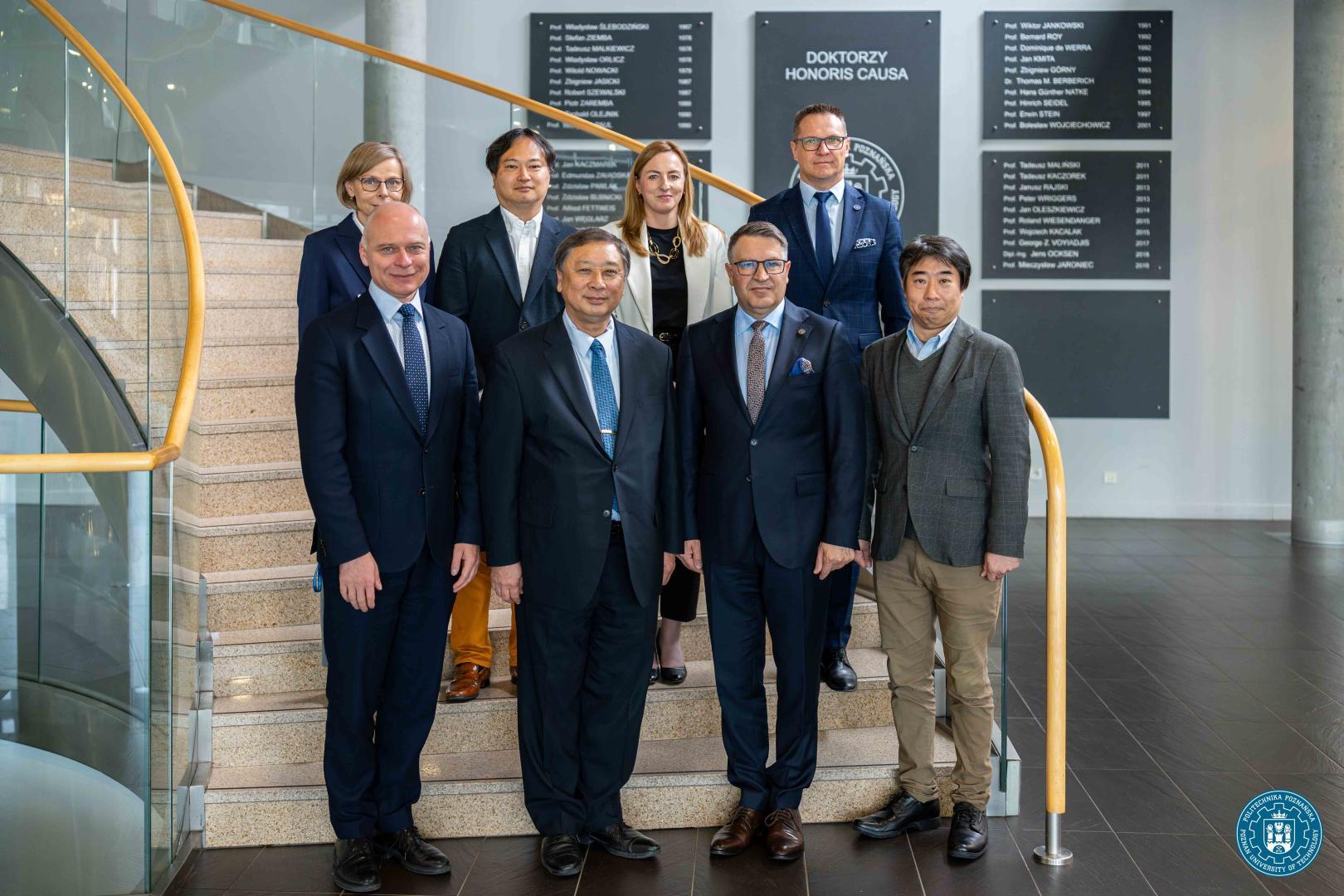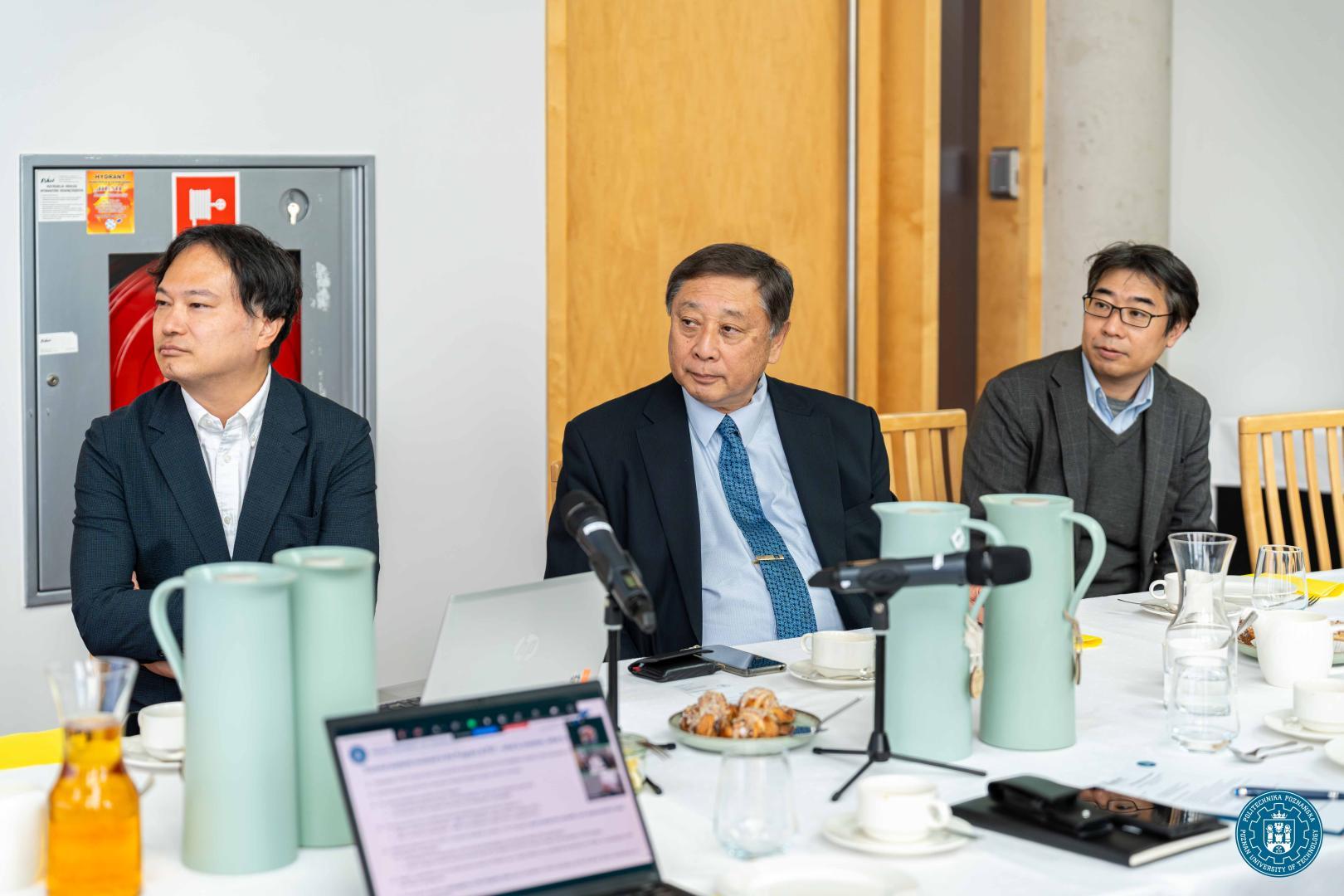
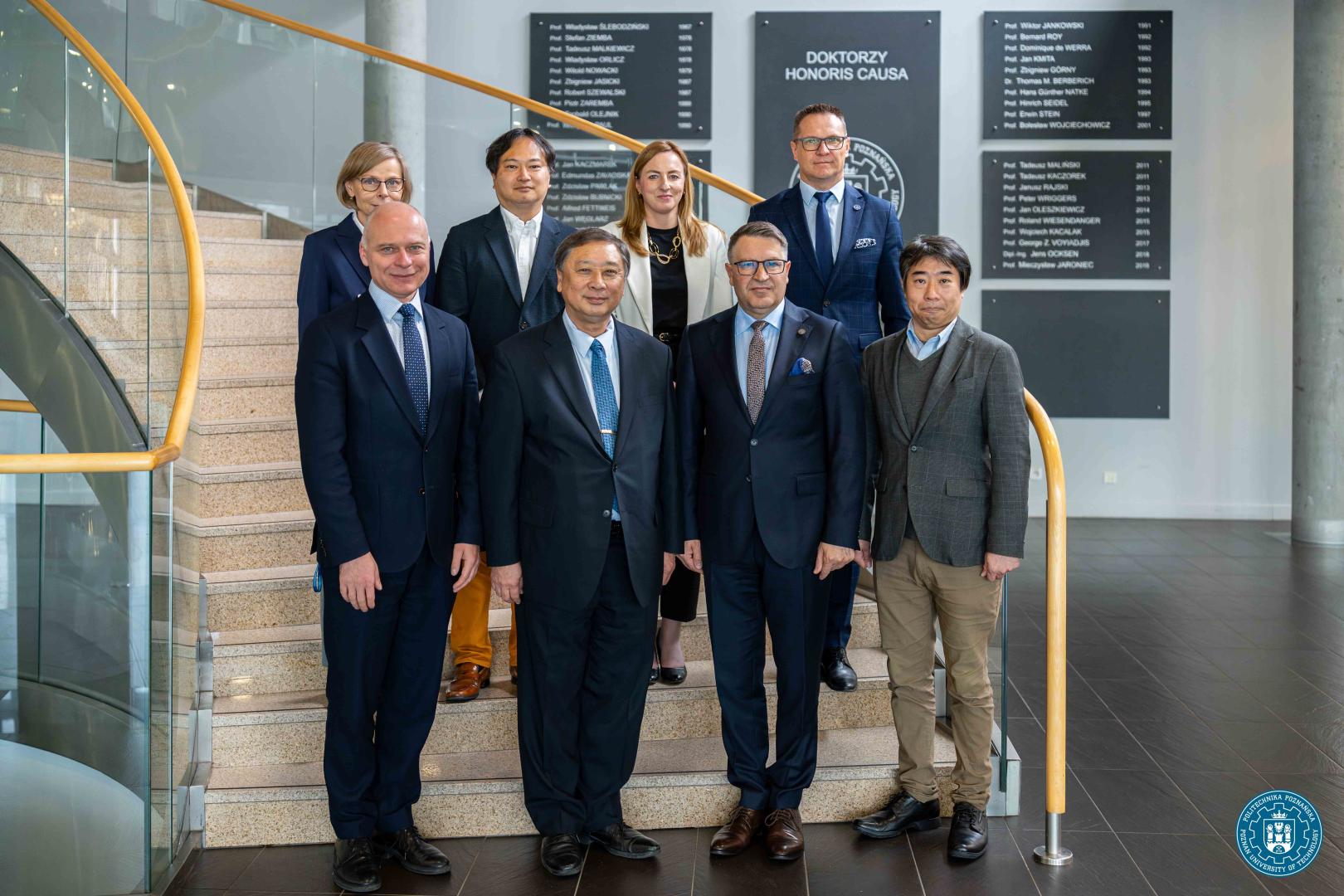
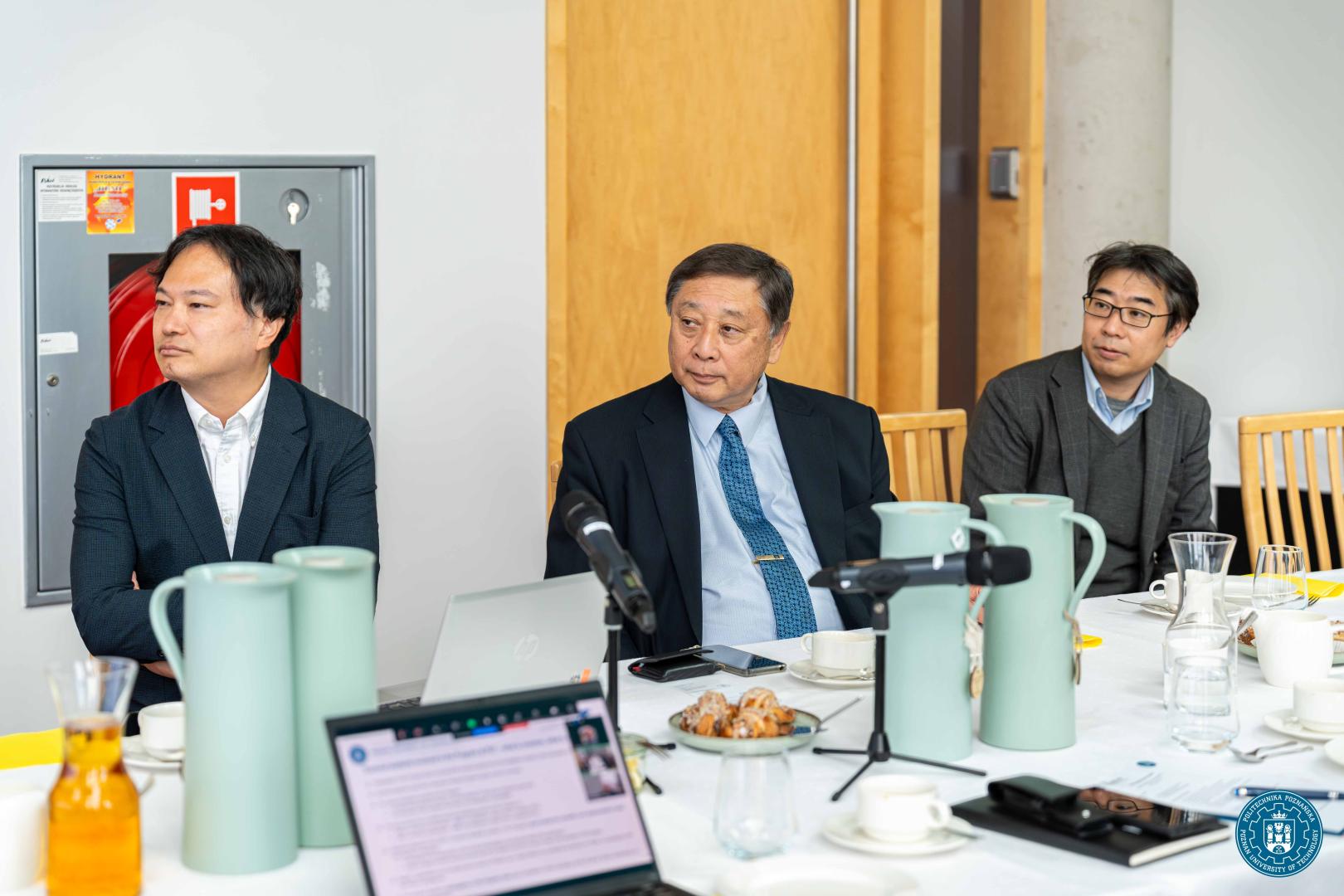

On 30–31 October of this year, Poznan University of Technology hosted a delegation from the University of Electro-Communications (UEC), Tokyo, Japan. The visit was an important element in further developing the existing scientific and educational cooperation between the two universities, as well as an opportunity to exchange experience in research, doctoral education, and the development of new technologies.
PUT was represented by: Prof. Teofil Jesionowski, Rector of Poznan University of Technology; Prof. Mariusz Głąbowski, Vice-Rector for International Cooperation; Prof. Alina Dudkowiak, Director of the Doctoral School; Prof. Michał Wieczorowski, Head of the Division of Metrology and Measurement Systems and expert member of the Minister’s Advisory Team for the “Implementation Doctorate” programme; Prof. Filip Ciesielczyk, Vice-Dean of the Faculty of Chemical Technology; Prof. Anna Kobusińska, Head of the Division of Information Systems; Dr. Michał Weissenberg, Leader of the Interdisciplinary Centre for Artificial Intelligence and Cybersecurity; and Ms. Agnieszka Sutherland, Administrative Manager of the Doctoral School.
UEC was represented by: Dr. Kazuaki Oya, Member of the Board of Directors; Prof. Kazuto Masamoto, Vice President; and Mr. Junji Hando, Head of the International Affairs Office.
The delegation’s visit took place in a friendly and substantive atmosphere, conducive to exchanging experience and discussing opportunities for developing cooperation between the universities.
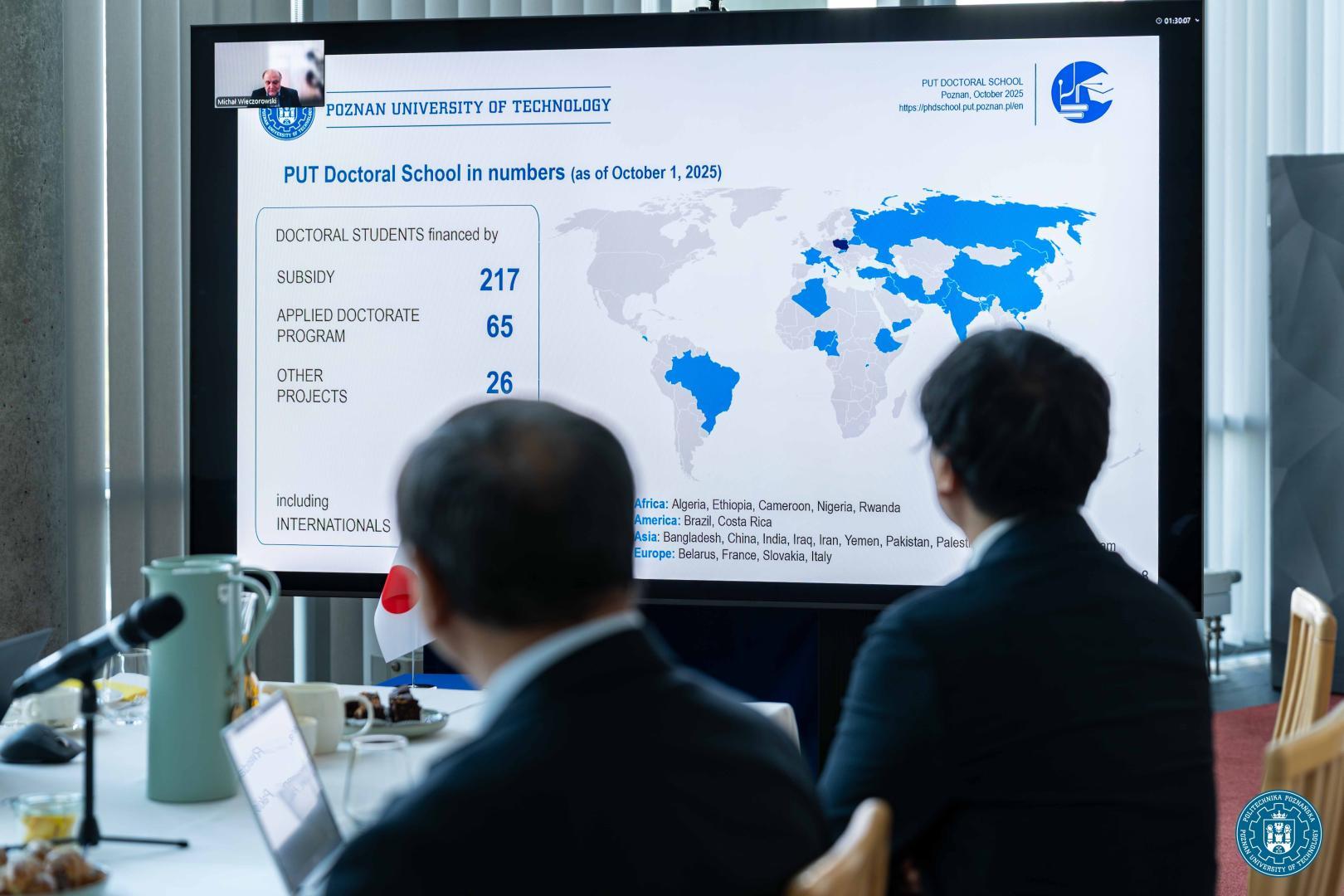
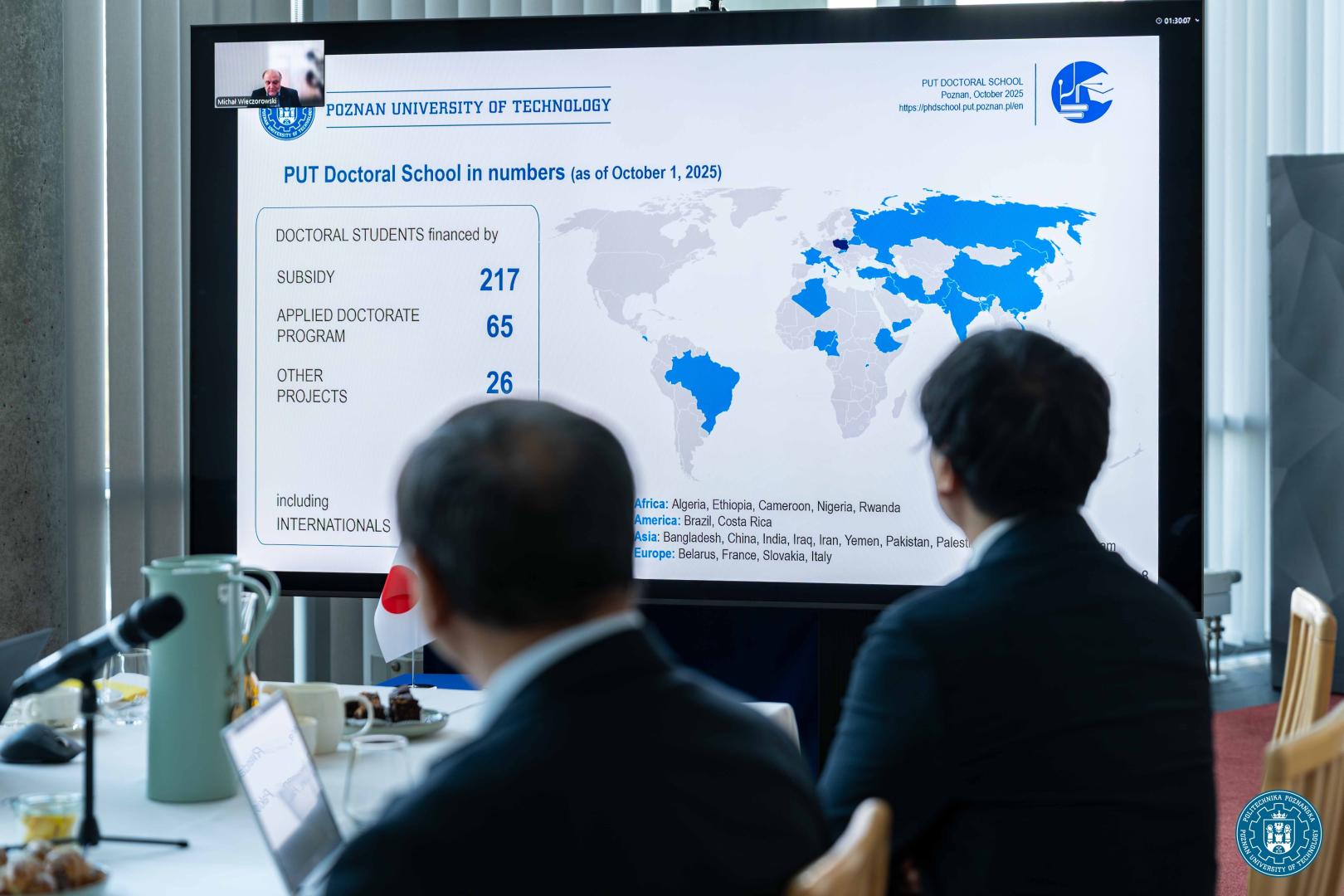
During the meeting, the current legal regulations concerning doctoral education at the Doctoral School were presented, with particular emphasis on the principles and conditions for carrying out implementation doctorates. The meeting also provided an opportunity to present good practices in cooperation between academia and industry, existing experience, and prospects for development and support of innovation within implementation doctorates.
In the next part of the meeting, the activities of PUT’s Centre for Artificial Intelligence and Cybersecurity (CAICS) were presented, including its mission, organisational structure, and cooperation with the socio-economic environment. Particular attention was given to projects currently carried out by the Centre, as well as plans for future research and implementation initiatives aimed at intensifying international cooperation and establishing joint research teams. During the discussions, the importance of further developing cooperation between UEC and PUT was emphasised—especially with regard to organising joint research projects, exchanging doctoral candidates, and developing partner education programmes, which constitute an important element of the long-term internationalisation strategy of both universities.
An important part of the meeting was a substantive discussion of progress in the SEIKO project, whose aim is to internationalise education and research and to build lasting relations between PUT and UEC. The parties summarised actions completed to date in the development of remote laboratory infrastructure, discussed in detail progress in the ongoing research tasks of the SEIKO project, and the schedule of actions that will be undertaken by both universities in the near future.
The meeting concluded with an emphasis on the importance of internationalising scientific research—especially in the fields of new technologies, computer science, and engineering—and on developing academic exchange as key elements of both universities’ development strategies. The meeting ended with a declaration to continue the dialogue and strengthen the partnership in subsequent stages of cooperation between Poznan University of Technology and the University of Electro-Communications.