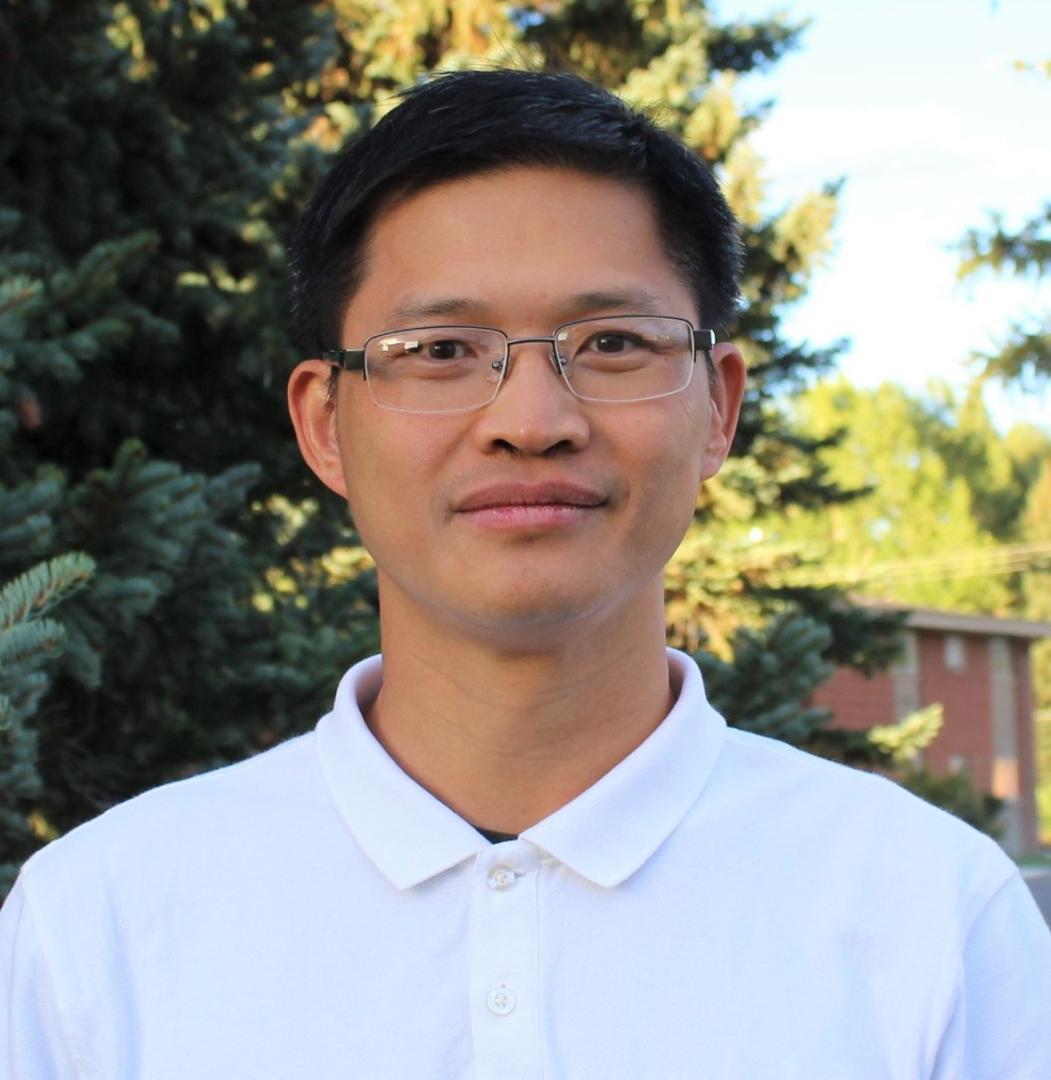
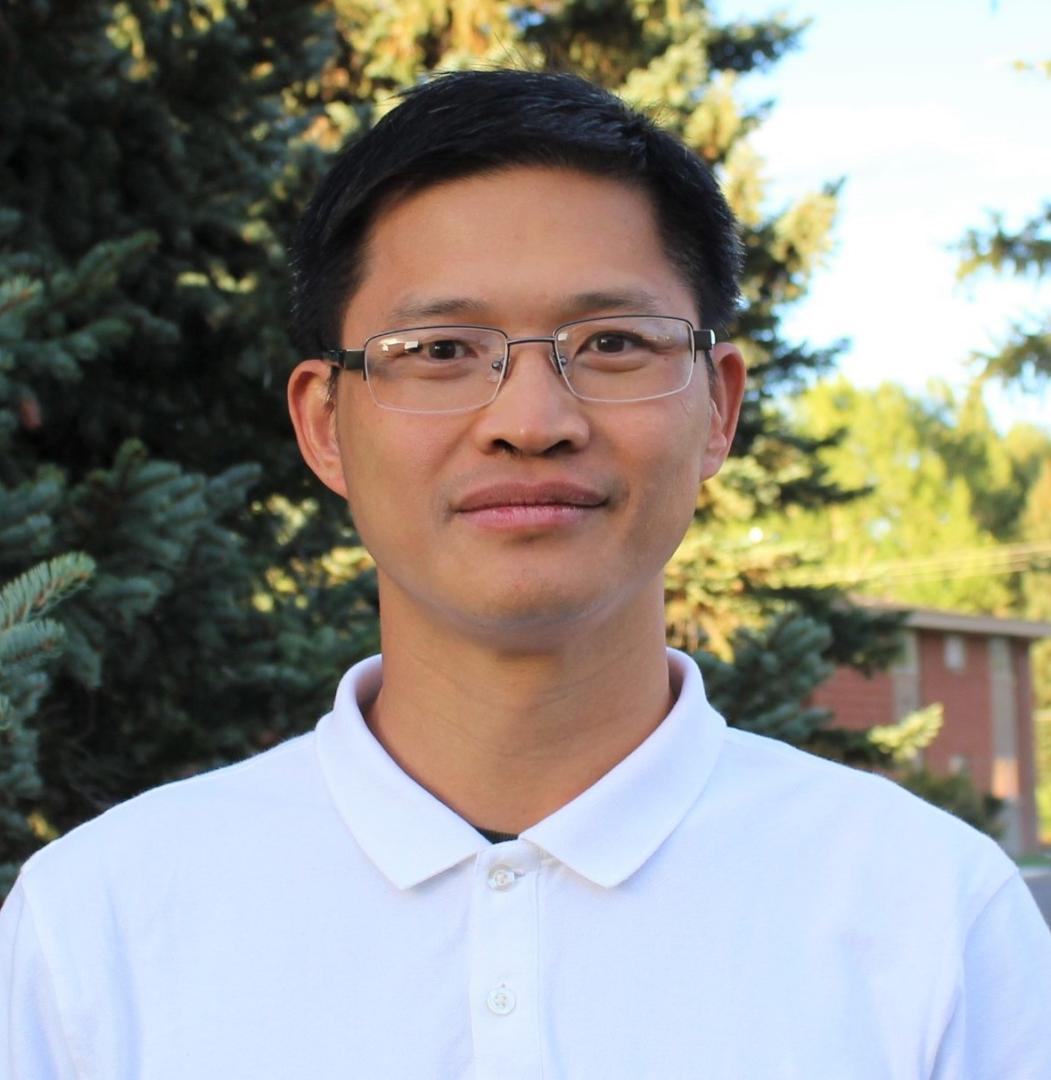
Dr. Duong Ngoc Nguyen z University of Wyoming odwiedzi Politechnikę Poznańską w dniach 10-21 maja w ramach programu „Inicjatywa Doskonała Współpraca Międzynarodowa - wizyty krótkoterminowe”. Celem tego programu jest intensyfikowanie międzynarodowej działalności badawczej i dydaktycznej w Politechnice Poznańskiej. W programie wizyty zaplanowano otwarte seminarium (12 maja) oraz wykłady w Szkole Doktorskiej (15 maja) poświęcone systemom rozproszonym.
Więcej informacji dostępnych jest na stronach https://wonders.cs.put.poznan.pl/seminaria oraz https://phdschool.put.poznan.pl/en
W ramach wizyty zaplanowano otwarte spotkania naukowe, na które zapraszamy wszystkich zainteresowanych pracowników oraz studentów Politechniki Poznańskiej:
Wtorek, 12 maja, godz. 11:30–12:30 (sala CW 8, Centrum Wykładowe)
Seminarium w Instytucie Informatyki: „Benefits and Challenges of Weak Consistency Models in Data-Intensive Distributed Computation”.
Piątek, 15 maja, godz. 11:45–15:00 (sala CW-BT 0.2.10, Centrum Wykładowe i Biblioteka Techniczna)
Wykłady w Szkole Doktorskiej z cyklu „Resilient distributed systems”:
- Part 1: Foundations and Fault Models in Distributed Systems.
- Part 2: Fault Tolerance Mechanisms and Strategies.
Program wizyty obejmuje również warsztaty i spotkania ze studentami I oraz II stopnia na kierunku Informatyka. Gospodarzem i opiekunem wizyty jest dr hab. inż. Paweł T. Wojciechowski, prof. PP.
Short bio of Dr. Nguyen
Dr. Duong Nguyen is an assistant professor at the University of Wyoming. He got his BSc, MSc, PhD, and postdoctoral training from Hanoi University of Science and Technology, Purdue University, Michigan State University, and Georgetown University, respectively. His research interests include distributed computing and system (including cloud computing and distributed machine learning), runtime monitoring, fault-tolerance, self-stabilization, and formal methods. His current research projects focus on designing efficient and resilient algorithmic solutions for large-scale distributed graph computations and distributed machine learning in uncertain and dynamic environments. His work has been published in leading journals in distributed computing such as IEEE Transactions on Parallel and Distributed Systems, Distributed Computing, and highly selective conferences such as International Conference on Distributed Computing and Networking, International Symposium on Reliable Distributed Systems, and Runtime Verification. His research has been supported by funding from NSF and NASA.
------------------------------------------------------------------------------------------------------
Seminar talk on Tuesday, May 12
Title: "Benefits and Challenges of Weak Consistency Models in Data-Intensive Distributed Computation"
Abstract:
As the volume of generated data scales, so too do computational demands and the uncertainty associated with increased application complexities. To meet these challenges, concurrent paradigms—specifically distributed computing—have become indispensable for delivering high performance and robust fault tolerance. One of the essential components in a distributed system is the data replication/synchronization service that allow multiple application processes to interact with the geographically dispersed copies (replicas) of the shared data as if they are a single, unified entity. The application processes access the shared data via an abstract service called distributed shared memory (DSM). Under the hood, the DSM is implemented by a replication protocol that meets certain constraints. Those constraints are formalized as consistency models. Strict replication constraints (such as those required by sequential consistency model) keep the replicas tightly synchronized to ensure a uniform view of shared data across application processes, but at the cost of degraded service availability in the presence of failures. Weak replication constraints (such as those imposed by eventual consistency) keep DSM service highly available even in the presence of failures, but application processes may temporarily have different (inconsistent) view of the state of the shared data.
Given the scale of modern data-intensive applications and the importance of service availability, many applications have adopted DSM based on weak consistency models. In this talk, I examine both the opportunities and the pitfalls of weakly consistent DSM. On the benefits side, I highlight performance gains from reduced synchronization overhead and, in domains such as distributed machine learning, counterintuitive improvements in solution quality. On the challenges side, I examine the inherent risks including prolonged computation and result divergence, and discuss mitigation strategies such as self-stabilization and mixed/adaptive consistency that help preserve correctness without sacrificing the performance advantages.
Source:
https://wonders.cs.put.poznan.pl/seminaria
------------------------------------------------------------------------------------------------------
Two invited lectures in the Doctoral School on Friday, May 15
Title: "Resilient distributed systems"
Abstract:
Ensuring that a program behaves as intended by its designer is both a fundamental requirement and a significant challenge. Even for traditional sequential programs, this process can require exploring an exponentially large state space. In distributed systems, this challenge is further compounded by factors beyond the designer’s control, including component failures and communication uncertainty.
Despite these difficulties, mission-critical distributed systems underpin much of modern infrastructure - from communication networks and online transactions to traffic management and monitoring. Therefore, designing correct distributed systems is not only desirable but also a practical necessity.
Part 1: Foundations and Fault Models in Distributed Systems.
This lecture explains the inevitability of faults in practical distributed systems and surveys common fault types. We then develop a formal framework for modeling faults, program executions, and desired correctness properties, providing a foundation for rigorous system design.
Part 2: Fault Tolerance Mechanisms and Strategies.
Building on the first lecture, this session explores algorithmic and architectural approaches for fault detection and tolerance such as the protocols underlying the operation of TCP, automating the addition of fault-tolerance to existing program, and self-stabilization.
Source:
https://phdschool.put.poznan.pl/en